
Last updated November 23, 2026
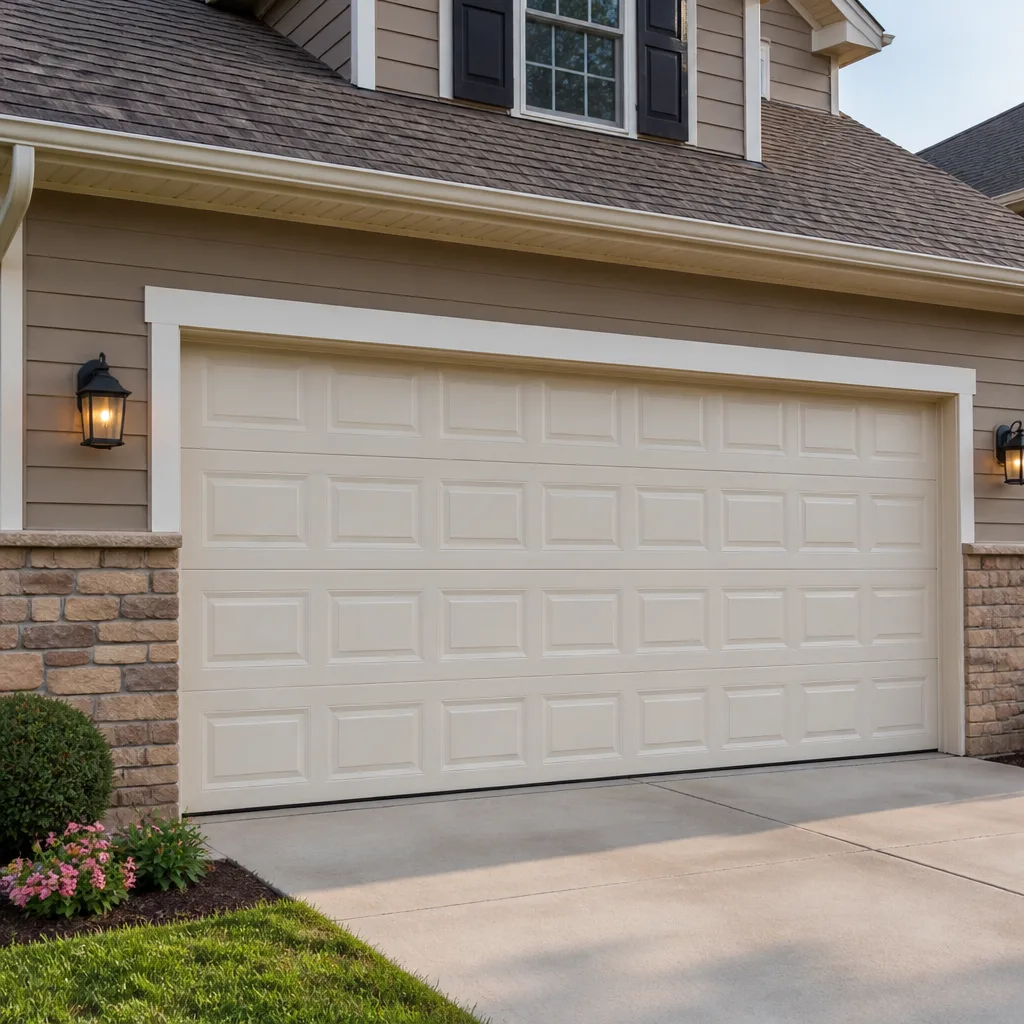 Raised-panel steel
 Carriage house
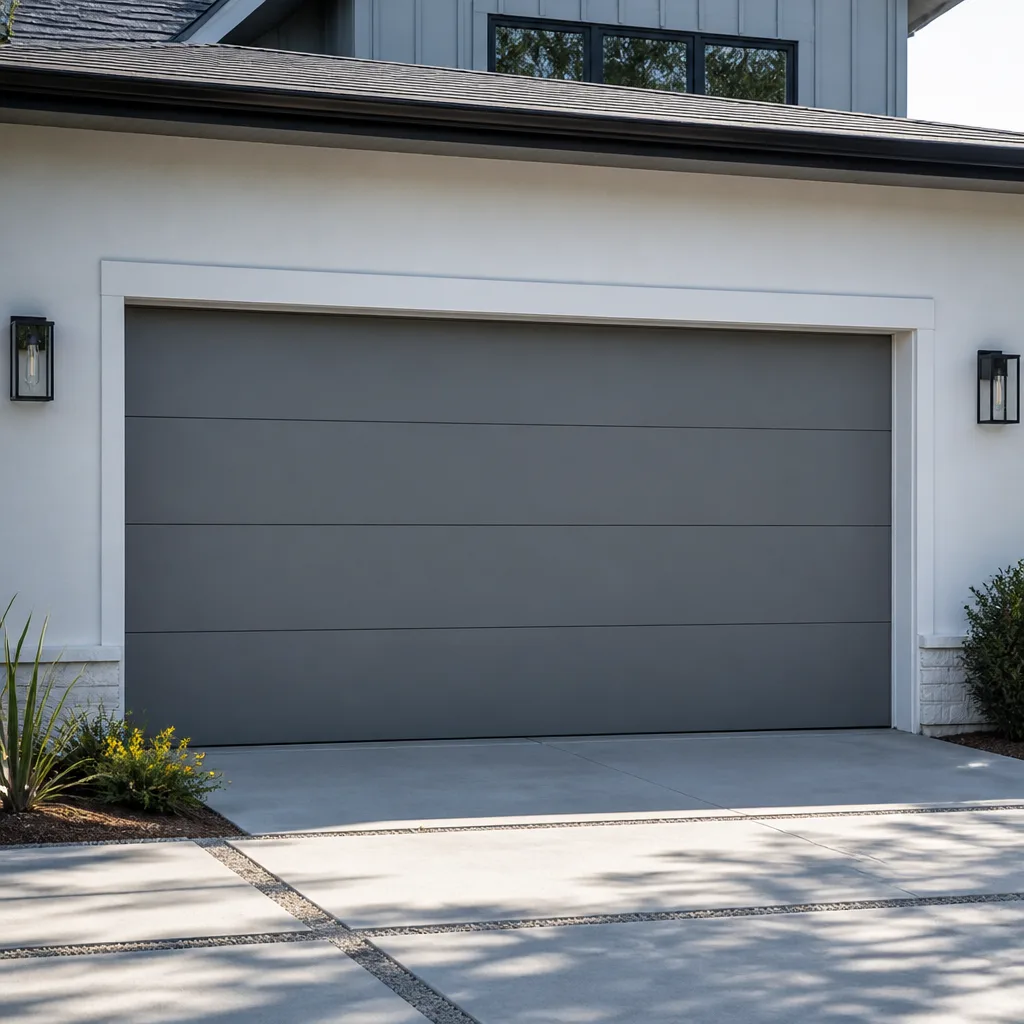 Modern flush
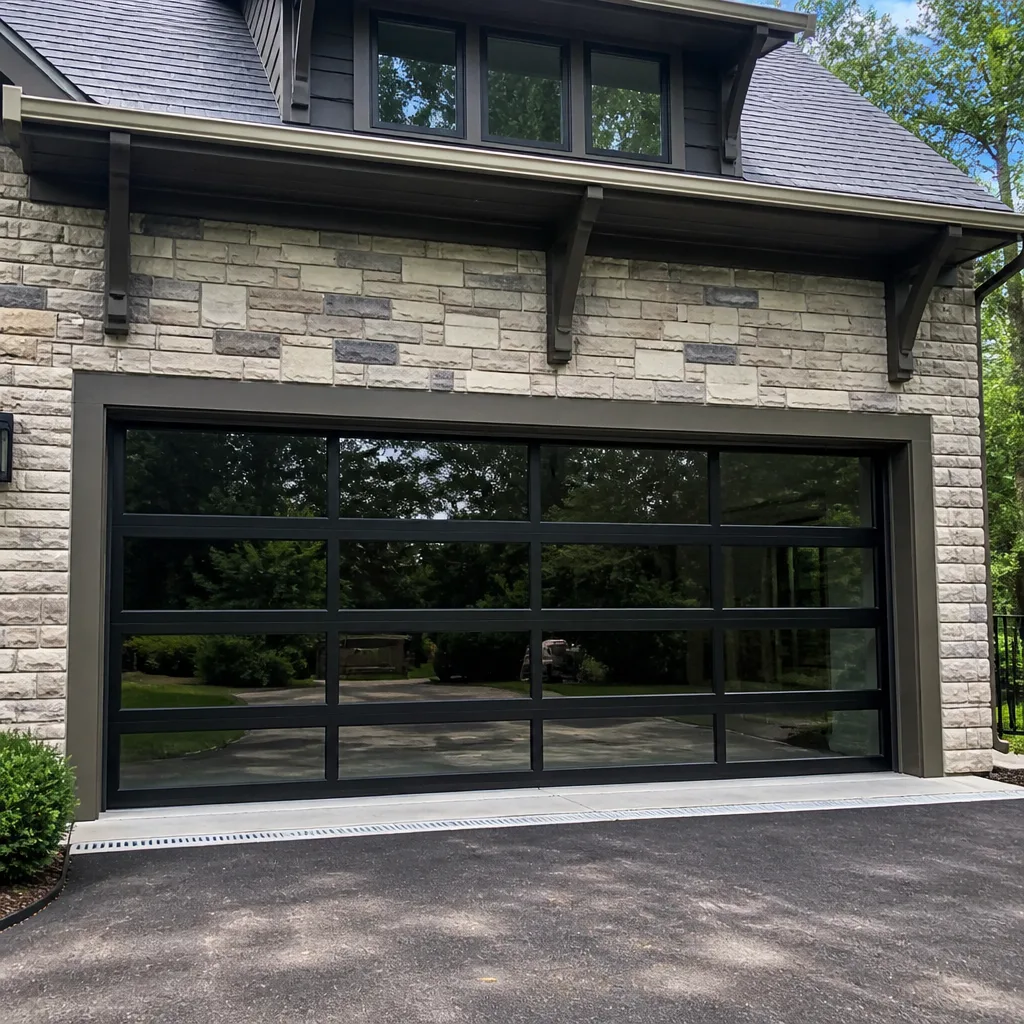 Full-view glass
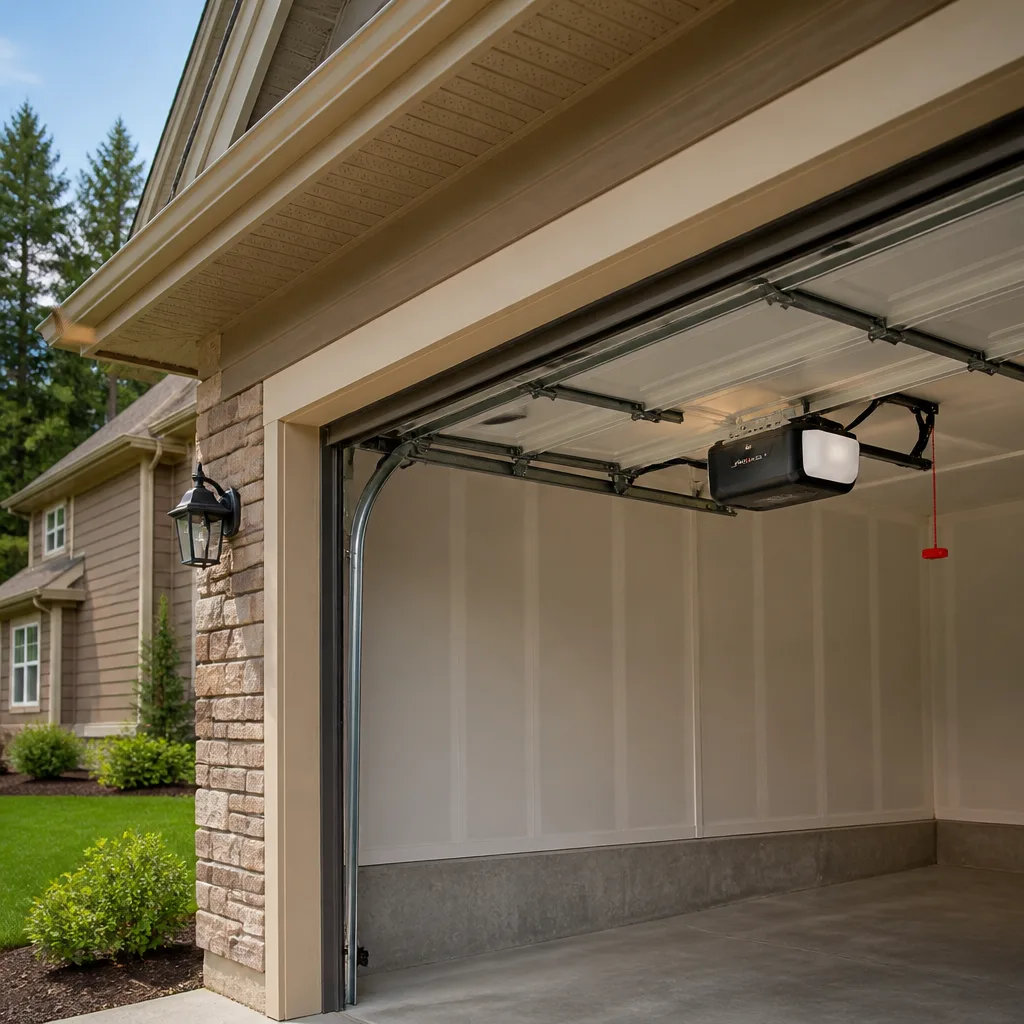 LiftMaster openers
 Chamberlain openers
Full 25-point door and opener safety check with every visit - springs, cables, rollers, tracks, and your LiftMaster or Chamberlain opener included
You get a price before we start. It does not change when the pro arrives.
Get your free estimateDIY vs Professional Garage Door: The Commerce City Homeowner’s Decision Guide
Most homeowners who get hurt working on a garage door are not careless people. They’re competent people who’ve wired outlets, replaced a water heater, and patched drywall, and they assume a door is just a bigger version of the same kind of job. That’s the misconception worth correcting before anything else. A tensioned torsion spring stores enough energy to break bones or worse, and no amount of general DIY confidence changes the physics of that. This guide draws an honest line between what’s genuinely safe to handle yourself and what isn’t, so Commerce City homeowners don’t pay for a task they could knock out in ten minutes or, worse, attempt one they shouldn’t touch.
Quick Answer
The majority of garage door maintenance is safe to do yourself: lubrication, hardware tightening, track cleaning, weather seal replacement, and safety sensor alignment. Anything involving torsion or extension springs, cables, the bottom bracket, or the door itself coming off the track under tension should be handled by a trained technician. Cosmetic decisions like painting or replacing panels fall in between. The dividing line isn’t skill level so much as stored energy and calibration knowledge.
Styles & brands we work with
- Raised-panel steel
- Carriage house
- Modern flush
- Full-view glass
- LiftMaster openers
- Chamberlain openers
Table of Contents
- The Task-by-Task Breakdown: Safe DIY, Caution, and Professional Only
- Is DIY Garage Door Repair Legal in Colorado?
- Why Springs Are Different From Every Other Repair
- Opener Repair: The Electronics Question
- The Real Cost of DIY Gone Wrong
- Tools You’d Need and Whether It Makes Sense to Buy Them
- How to Describe a Failed DIY Attempt to a Technician
- Common Mistakes to Avoid
- When to Call a Professional
The Task-by-Task Breakdown: Safe DIY, Caution, and Professional Only
Here’s the honest version of the line, organized by how much stored energy or calibration precision a job requires. If you keep only one thing from this guide, keep this table.
Green: Safe for Most Homeowners
- Lubricating rollers, hinges, and springs (yes, you can lubricate a spring; you just can’t touch its tension). Use a silicone or lithium-based spray once or twice a year. In Commerce City’s dry, dusty summers, a second application before winter is worth doing.
- Tightening hinge and bracket bolts that have vibrated loose. Hand tools only.
- Cleaning the tracks with a damp rag and a light solvent. Never add grease to a track; that attracts grit.
- Replacing the bottom weather seal on a sectional door. It slides out of an aluminum retainer and needs no tools on most models.
- Aligning or cleaning safety photo-eye sensors at the bottom of the tracks.
- Adjusting opener travel limits and force settings per the manufacturer’s manual, which is a menu setting, not a mechanical adjustment.
- Replacing remote batteries and reprogramming remotes. On LiftMaster and Chamberlain openers, the pairing procedure is well documented.
- Replacing a broken roller when the door is fully down and the weight is off the track section, and only on doors that don’t have extension springs above each section.
Yellow: Possible, But Read Every Word of the Manual First
- Painting a steel door. Prep work matters here: a poorly prepped latex coat on a factory finish will bubble in a Colorado freeze-thaw cycle. The mechanics are straightforward.
- Replacing panels on a newer sectional door. If your door is a Wayne Dalton or Raynor model with documented panel part numbers, a homeowner with patience can swap a dented panel. Anything installed before 2010 is likely to have non-standard dimensions, and matching becomes guesswork.
- Resetting a door that went off track while fully closed. Sometimes a door comes out of a track because a roller popped free and nothing is bent. If you can visually confirm that, a careful homeowner can guide it back. If there’s any bend or the door’s weight feels wrong, stop.
- Replacing a wall-mount opener on a jackshaft door. Wiring a new opener to an existing outlet is fine if the outlet is already there. Wiring a new circuit is not a garage door decision, it’s an electrician decision.
Red: Professional Only
- Torsion spring replacement. This is the single most dangerous job on a residential door. Torsion springs are wound to roughly 7-9 full turns of stored energy; the winding bars need to be fully seated and controlled while the spring is under load.
- Extension spring replacement. Lower energy than torsion, but still under real tension, and the door’s weight is unsupported the moment the spring is off.
- Cable replacement. Cables are under direct tension from the springs. Never handled with a screwdriver or a pair of pliers inside a drum.
- Bottom bracket or drum work. Both are under tension even with the door fully closed.
- Track realignment after a heavy impact. Bolt holes bend, and geometry that’s 1/8 inch out will send the door off again in a week.
- Replacing a door and its tracks as a system. Spring tension and track geometry have to match the door’s exact weight.
If you’re not sure which category a repair falls into, our garage door repair page walks through the diagnostic side. For inspection purposes, that’s usually where the answer lives.
Is DIY Garage Door Repair Legal in Colorado?
There’s no Colorado state statute that makes it illegal for a homeowner to work on their own garage door. The rules sit with local building departments and, more importantly, with your homeowner’s insurance.
Here’s the practical version for Commerce City homeowners:
- No permit is required for routine maintenance, spring replacement, opener repair, or like-for-like part swaps on an existing door.
- A permit is typically required when you replace a garage door with one of different dimensions, change the opening, add a door where there wasn’t one, or modify the structure around it. If you’re weighing that scope, our garage door installation page covers what’s inside that permit conversation. Ask Commerce City’s building department for the exact rules on your project before demolition starts.
- Electrical work for a new opener, adding an outlet, or running new wire is a separate matter. Most cities require a licensed electrician for anything beyond a straight swap on an existing outlet. If you’re not sure, assume you need one.
On the insurance side, the common pitfall isn’t a fine; it’s a denied claim. A garage door that falls and damages a vehicle, a motorcycle, or a person inside the garage is exactly the kind of claim your insurance carrier will investigate. If the door failed because a homeowner attempted a spring replacement and got the tension wrong, the adjuster may treat that as negligent work and exclude the loss. Read your policy, and if a structural modification is planned, call your agent before you start.
Why Springs Are Different From Every Other Repair
A tensioned torsion spring on a standard two-car garage door holds roughly the same stored energy as the bolt of a rifle being cycled, only held in suspension against the shaft. That comparison is the reason any honest guide has to draw the line here and not somewhere more lenient. The spring stores energy, not force in the abstract. Every task downstream of that energy, from the cables to the drums to the bottom bracket, carries some fraction of the same risk.
What you can safely do around a spring:
- Look at it and note whether the coils are gapped, whether there’s any gap in the wire, and whether the spring is centered on the shaft.
- Lubricate the coils to slow wear.
- Listen: if you hear a metallic bang when the door goes up or down, or the door lifts easily by hand, a spring is losing tension.
What you can’t safely do is wind or unwind a spring with hand tools, remove the cable drums, or attempt to “give it one more turn” to reset the balance. Spring repair done safely, done right, requires the correct winding bars, safety glasses, and a working understanding of how many turns a specific spring needs based on the door’s weight, and those two variables are what most DIY failures get wrong.
Our own technicians treat spring replacement as the specialty they were trained for. The work is dangerous enough that a small miscalculation can turn a two-hundred-dollar repair into a much larger bill, and the reason we handle it is exactly because the mistake is so easy to make.
Opener Repair: The Electronics Question
Openers occupy their own strange space in the DIY conversation. A homeowner who’ll happily swap a light switch sometimes balks at touching the opener housing, and that hesitation isn’t unreasonable. Modern openers are part motor, part logic board, part radio receiver, and the three interact in ways that aren’t obvious from the outside.
What you can usually do yourself:
- Reprogram remotes and keypads. Every major brand has a documented button-press sequence. On a Craftsman or LiftMaster opener, the “learn” button and a fresh remote cover most pairing jobs.
- Adjust travel limits and force settings. Menu-driven or thumbwheel-driven, depending on the model. The manual is your friend. Don’t push the force setting up to fix a door that feels heavy; investigate the door first.
- Replace the wall console or a photo-eye pair if the wiring is already in place and matches.
- Reboot the opener when a smart/WiFi unit drops offline. Ten seconds off, ten seconds on does more than you’d expect.
What belongs with a technician:
- Replacing the logic board or receiver module.
- Diagnosing an opener that runs but doesn’t move the door (usually a stripped gear or a bad capacitor).
- Replacing the motor, belt, chain, or rail assembly.
- Adding a new opener where the ceiling has no wiring or the door is a high-lift or low-headroom configuration.
Smart openers from LiftMaster, Genie, and Chamberlain that have failed firmware or a dead receiver are the kind of repair that most handyman services won’t attempt. Our technicians work on those routinely, and if you want the broader scope we cover, our garage door opener repair page is the place to start. Whether you hire us or not, if your opener is more than ten years old and the failure is electrical, the safest call is a specialist.
The Real Cost of DIY Gone Wrong
The math on a failed DIY attempt isn’t just parts and a technician’s labor. It’s the compounding cost of what the first mistake damages.
- Wrong torsion spring on the shaft. A homeowner buys the closest matching spring from a home center, winds it to the same number of turns, and the door moves unevenly, which wears the bearings and eventually damages the drum. A spring that was a $100 part becomes a $300+ repair once the drums and cables are involved.
- Cable slip during spring replacement. If the cable walks off the drum while a homeowner is working on the springs, the door can drop suddenly, bend at least one section, and knock the tracks out of alignment. What started as a spring repair becomes a panel-and-track repair.
- Opener gear stripped by forcing a door. A homeowner whose door lifts only halfway assumes the opener is weak, cranks up the force setting, and the opener’s nylon gear wears through in a month. The gear alone is a modest part; the motor it takes with it is not.
- Off-track door forced back into place. When a door is off track because a roller popped out, a homeowner who forces it back with a pry bar tends to bend a hinge or flatten a track section. That’s no longer a five-minute fix.
- Panel replacement on the wrong model. A homeowner orders a replacement panel for a Wayne Dalton or Raynor door based on a photo of the outside and finds the dimensions wrong on arrival. Some brands use a specific discontinued panel profile; ordering without checking part numbers first is a common miss.
The pattern in every one of those situations is the same: a modest repair turns into a larger one because the first attempt was made without the specific information a trained technician has. That’s not a knock on the homeowner. It’s just that some jobs hide information in the door.
Tools You’d Need and Whether It Makes Sense to Buy Them
For the green-list tasks, the honest tool list is short and cheap:
- Socket set (3/8″ drive, standard and metric sockets)
- Phillips and flathead screwdrivers
- Adjustable wrench
- Step ladder
- Vise-Grips for older hinge hardware
- Silicone or lithium-based lubricant spray
- A rag and a light solvent
Budget-wise, a homeowner starting from zero might spend around $100-$150 on that list at a home center, and every item is useful elsewhere in the house. Buying the kit makes sense.
For the red-list tasks, the tool list gets more specific and more expensive:
- Winding bars matched to the shaft diameter (they come in 1/2″ and 5/8″ for most residential doors)
- Cable puller or come-along for controlled cable work
- Safety glasses rated for impact
- Two-person assistance for anything door-sized
- A replacement spring with the correct inside diameter, wire gauge, and length for the door’s weight
That last item is the actual cost driver. A correct spring isn’t expensive on its own, but the wrong spring multiplied by a service call is where the math falls apart. If the job is a one-time spring replacement on a door you’ll keep for another fifteen years, buying the tools and learning the trade isn’t a reasonable trade. If you’re fixing doors as a landlord or building a set of rental properties, having a technician you trust is still the better return.
How to Describe a Failed DIY Attempt to a Technician
The most common mistake homeowners make after a failed DIY attempt isn’t the attempt itself. It’s the silence. When you call and don’t mention what you tried, the technician walks in cold, sees a symptom instead of a cause, and takes longer to diagnose the job. That’s fine, but it’s slower and less accurate than a five-minute description on the phone.
Here’s how to get the fastest, most accurate assessment:
- Say what you attempted. “I tried replacing the torsion spring myself and stopped after the first winding bar,” or “I replaced the bottom seal and now the door won’t close all the way.”
- Say where you stopped and why. A technician who knows you stopped mid-winding will check the spring’s seated position before anything else.
- Describe the symptom, not the diagnosis. “The door goes up about two feet and stops,” not “I think the opener is broken.”
- Mention any parts you changed. If you swapped in a different spring, remote, or sensor, that modifies the diagnosis entirely.
- Note anything unusual about the noise or the motion. Grinding, popping, uneven lift, a bang when the door closes: each points to a specific component.
- Say whether the door is safe to operate right now. If you’re not sure, don’t run it. Leaving it down is safer than running it on a guessed repair.
There’s no judgment in any of that. Our technicians handle spring repair and opener diagnostics all day; a customer who attempted a fix and called when it didn’t work out is a customer who saved the technician half the diagnostic conversation.
See the difference
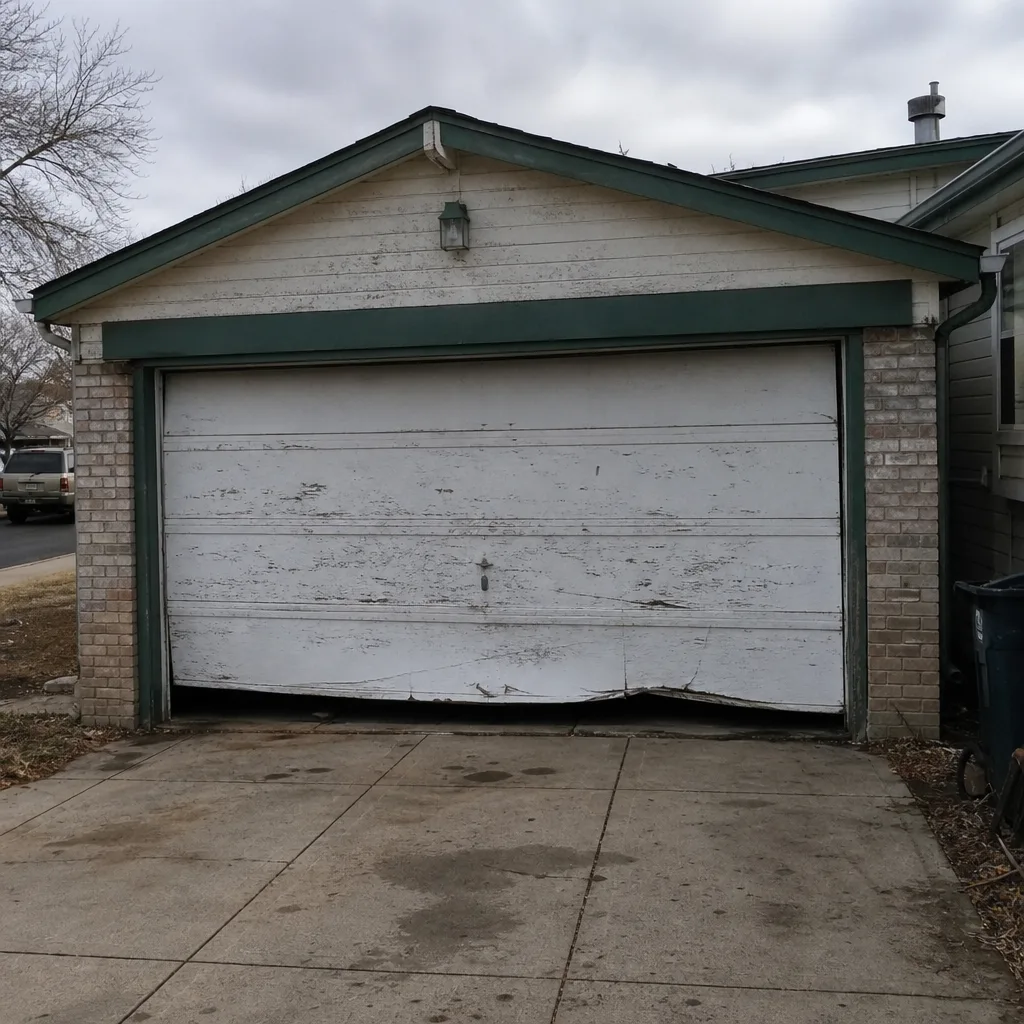 Before
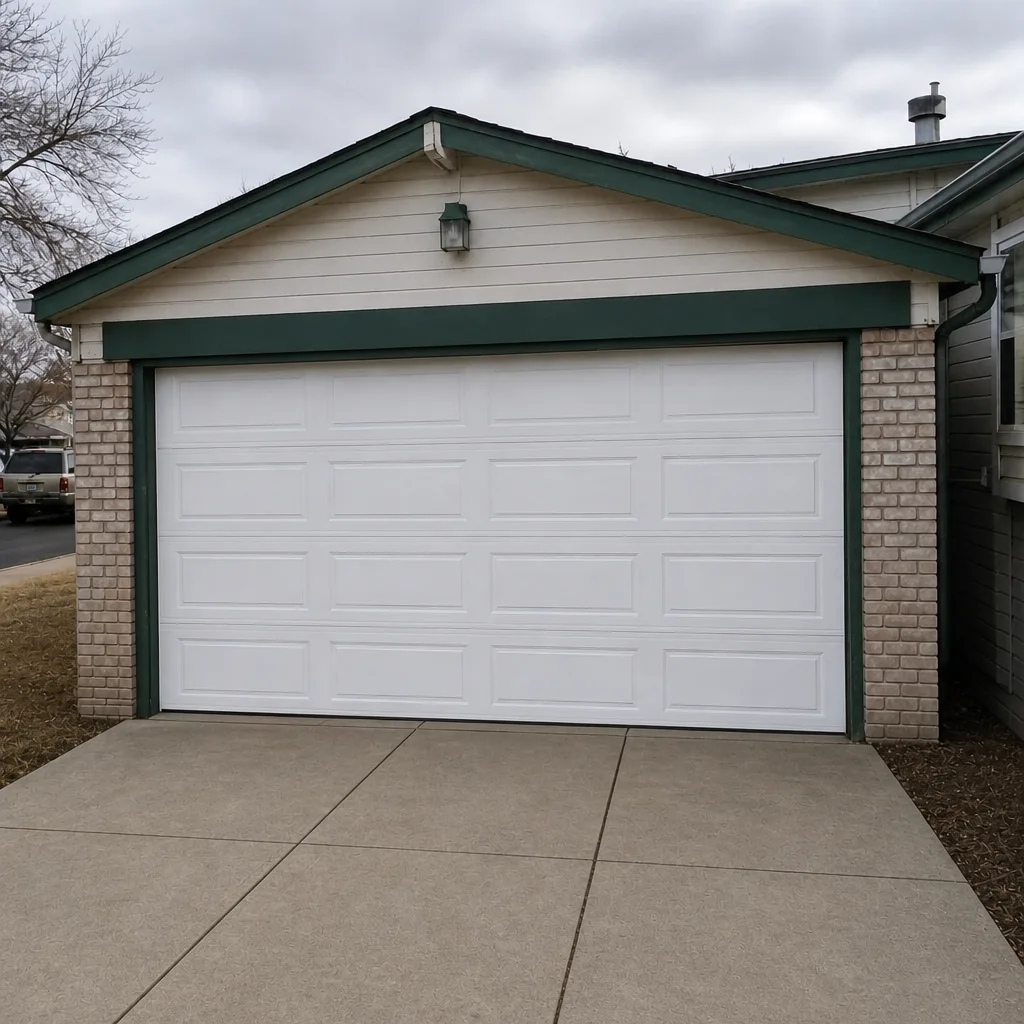 After
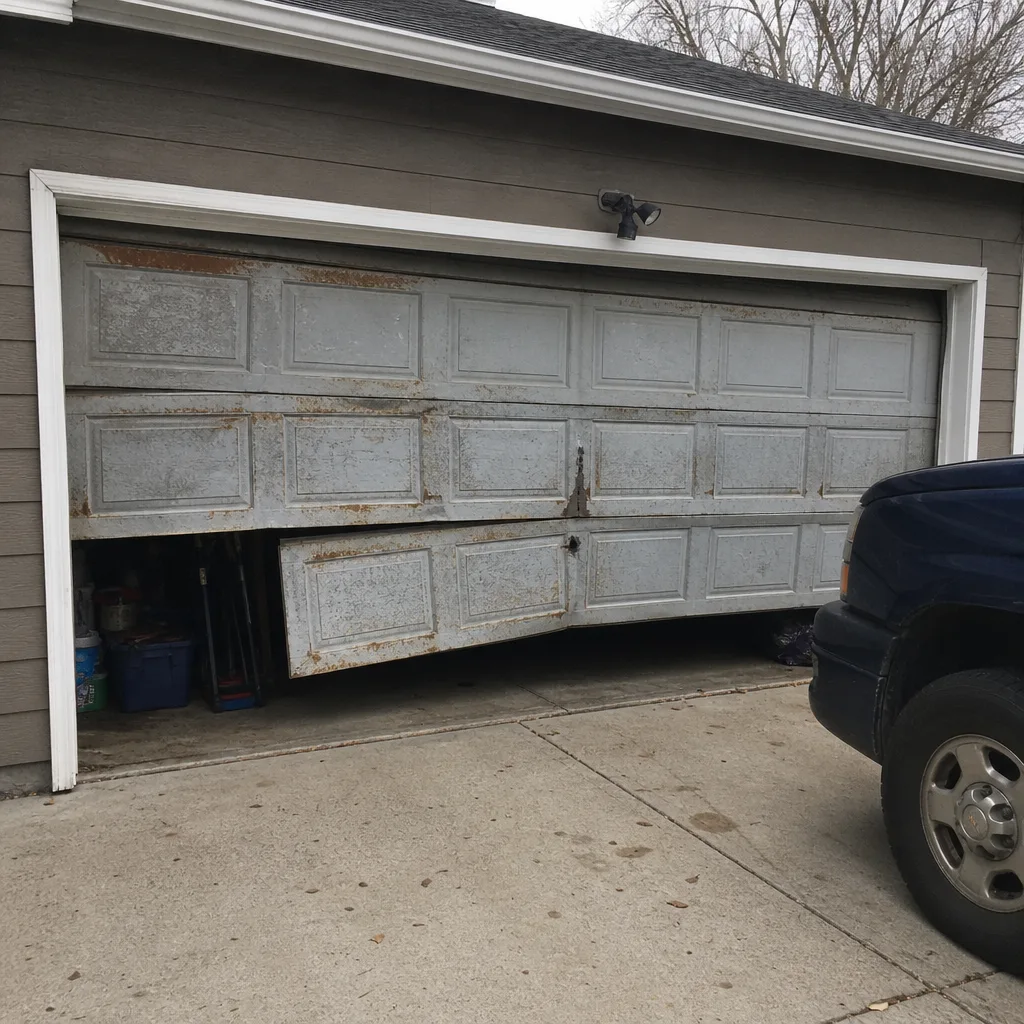 Before
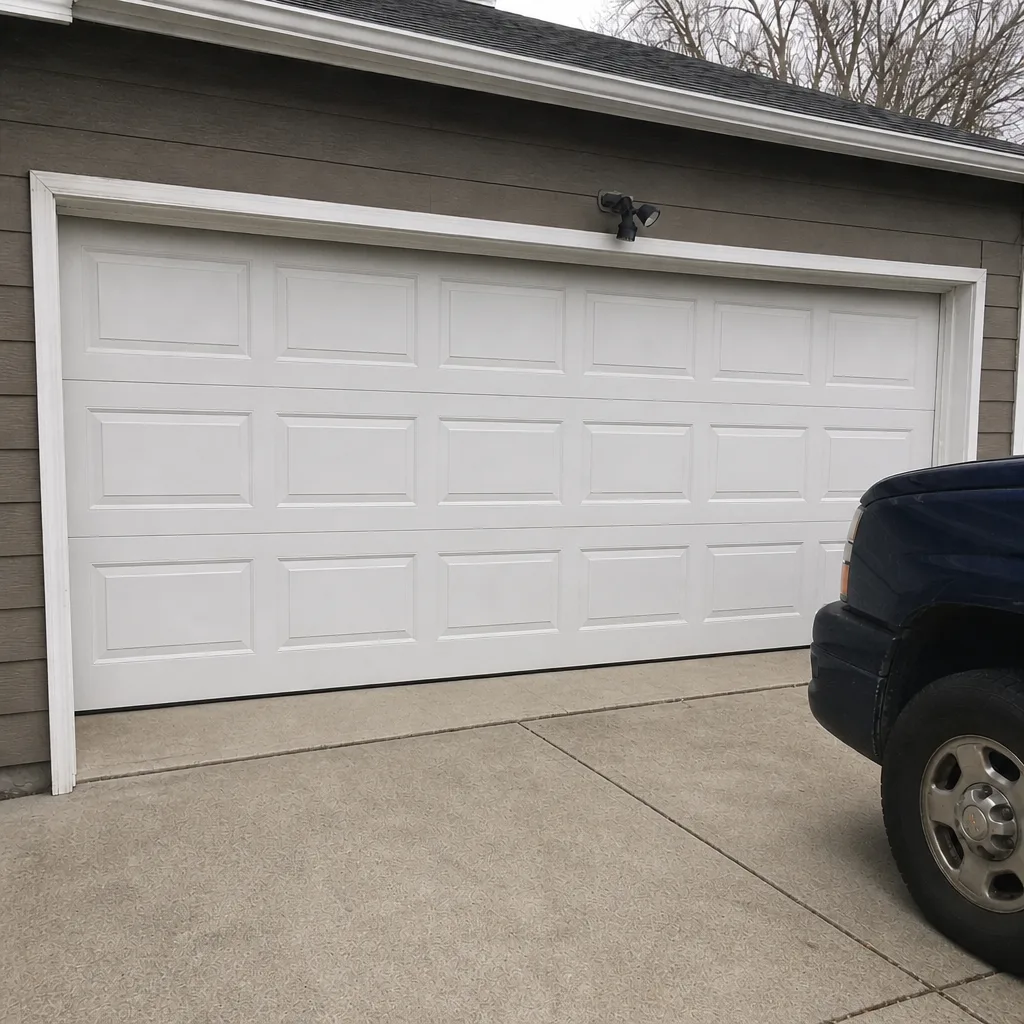 After
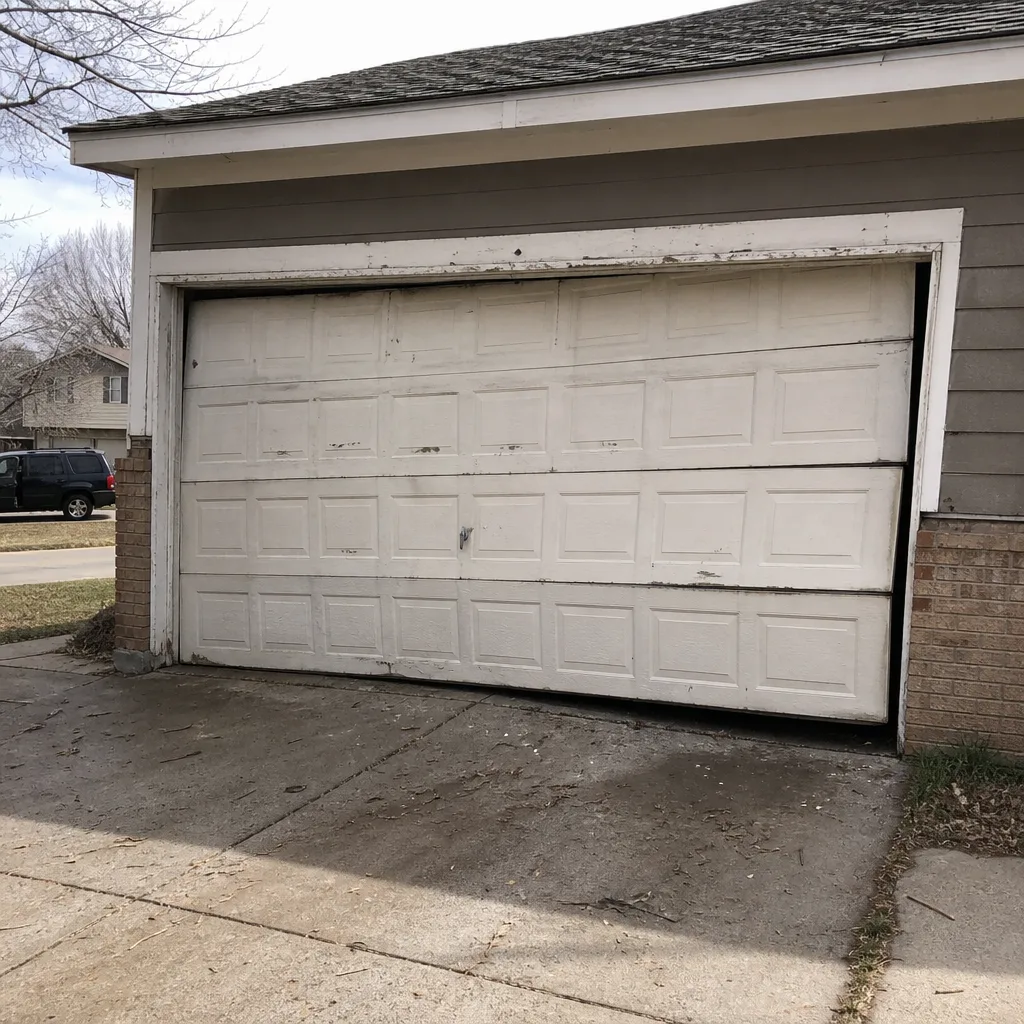 Before
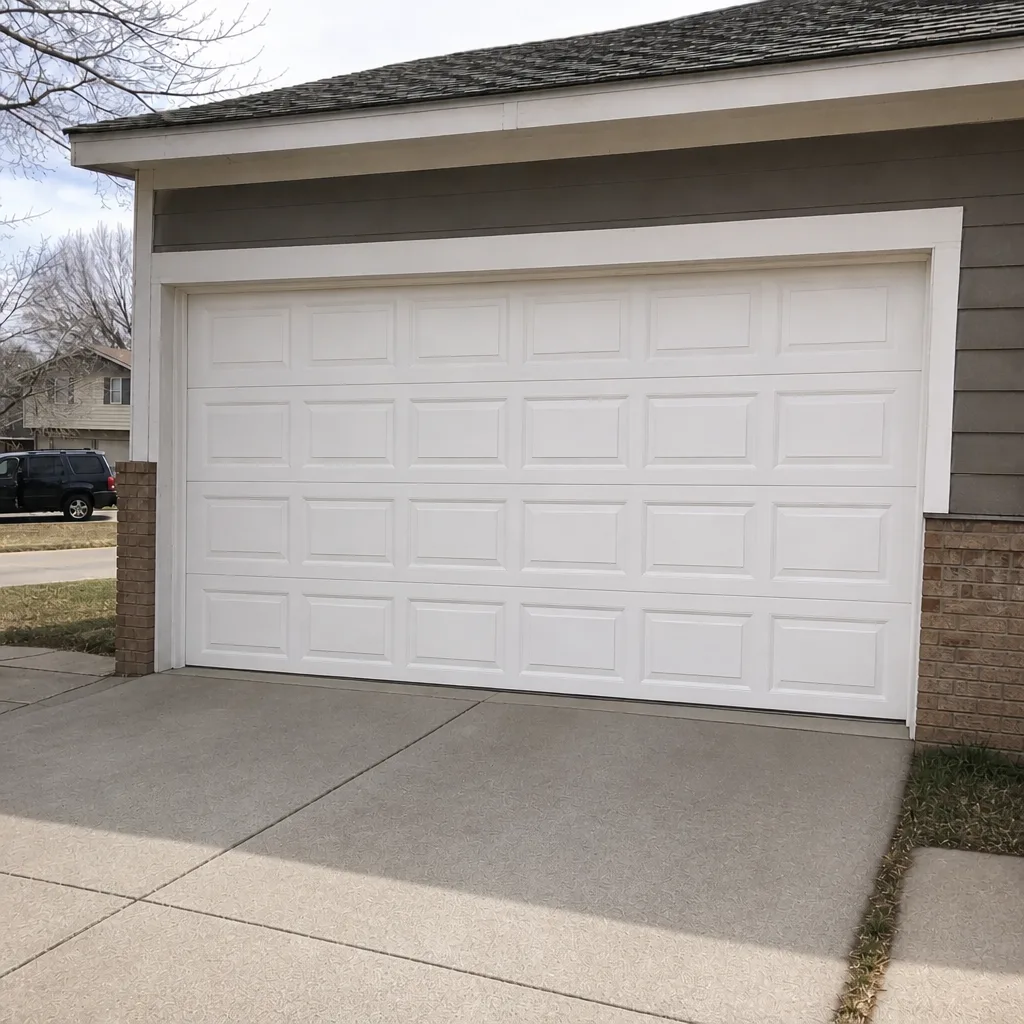 After
Safety Caveats Worth Repeating
If you take one sentence from this guide, take this one: any repair that requires loosening a spring, a cable, a drum, or a bottom bracket should be handled by a trained professional. That includes the “small” jobs that feel like they should be exceptions. There’s no “small” spring job.
Two specifics for Commerce City homeowners:
- Never put your hands, tools, or fingers near a spring or cable under tension to check “if it’s really loose.” A spring that looks slack may still be holding turns.
- If the door is stuck open, don’t force it closed. A door stuck open overnight is a security problem in a way that a stuck-closed door isn’t, but forcing a door that’s off track tends to bend the panels. Call for service instead. We answer 24/7, fast dispatch from 7am to 7pm, Sunday through Friday.
Homeowners in Commerce City who have a door that’s been making noise for weeks are usually dealing with a loose hinge bolt or dry rollers, both of which are green-list tasks. But if the noise is a shriek or a bang, stop and call.
Common Mistakes to Avoid
- Applying grease to the tracks. A track is supposed to be clean and dry. Grease attracts grit, which jams the rollers and eventually forces the door off the track. On a Commerce City door dealing with summer dust, grease is worse than nothing.
- “Resetting” a spring by giving it one more turn. A door that won’t stay up is a door whose spring has lost tension, not a door that needs a tuning adjustment. Adding turns by hand is how people break wrists.
- Cranking up the opener force setting to compensate for a heavy door. The force setting is a safety limit, not a power boost. If the door needs more force, the door is the problem.
- Replacing one of a matched pair of torsion springs. Springs on the same door wear together. Replacing one leaves the door unbalanced and puts the new spring under twice the work. A pair costs about twice a single spring for a reason.
- Ignoring a bent track after a minor bump. A slightly bent track will run fine for a few weeks and then pop a roller under load.
- Buying a replacement spring by color. The color code on a spring is a rough indicator, not the specification. The correct spring is chosen by the door’s weight, wire gauge, inside diameter, and required turns.
- Running a door with a broken cable. A broken cable means the door’s weight is no longer controlled on that side. Running it accelerates the damage and can drop a panel.
When to Call a Professional
Call a professional when any of these is true: a spring is broken or won’t hold the door open, a cable is slack or snapped, the door comes off its track and won’t re-seat without force, the door drops unevenly on one side, the opener runs but the door doesn’t move, or a repair you attempted didn’t fix the problem. Any of those is a call-now situation in Commerce City; the longer a broken door runs, the more parts it takes with it.
Commerce City Garage Door Repair Pros offers free estimates in Commerce City – call (833) 482-6835. We answer 24/7. Fast dispatch from 7am to 7pm, Sunday through Friday. Prices are set per job by written estimate before any work begins, and the estimate is free.
Frequently Asked Questions
No. Torsion and extension springs are under enough stored energy that a mistake can cause serious injury, and Colorado doesn’t consider spring replacement a permit-level homeowner task that one person should take on without training. A trained technician has the winding bars and the door-weight knowledge to set the spring correctly. Call (833) 482-6835 for a free estimate.
A single torsion or extension spring repair typically runs in a modest range depending on door size and spring type, and a matched pair is usually replaced together at roughly twice the single-spring cost. The written estimate sets the final price before any work starts. Call (833) 482-6835 for an exact quote; estimates are free.
Yes, for most repairs. There’s no Colorado statute that bars a homeowner from working on their own garage door. Permits matter for door replacements or structural changes, and electrical work beyond a straight swap usually requires a licensed electrician. The bigger risk is your homeowner’s insurance treating a failed DIY repair as a negligent-work exclusion. Call (833) 482-6835 if you’re unsure whether a repair is in the safe-DIY category.
Only if the door is fully closed, a single roller popped out of the track, and there’s no visible bend. Anything else belongs with a technician. Forcing an off-track door back with a pry bar bends hinges and flattens track sections. Call (833) 482-6835 for a free estimate before you force anything.
Torsion spring replacement is the highest-risk repair on a residential door. The spring is wound to several full turns of stored energy, and the winding bars must be fully seated while the spring is under load. Extension springs and cable work come close. Our technicians handle spring repair as a specialty because the mistake is so easy to make. Call (833) 482-6835 to schedule a repair.
Yes. We work on what you already have, regardless of brand, including LiftMaster, Chamberlain, Genie, Clopay, Amarr, Wayne Dalton, Craftsman, and Raynor. If you attempted a repair and it didn’t work out, just describe what you tried and where you stopped, which saves diagnostic time. Call (833) 482-6835 for a free estimate in Commerce City.
The written estimate sets the price before any work begins, and we quote after we’ve inspected the door. If the scope changes once a technician is on site, they’ll walk you through what they found and confirm a new price before continuing. Call (833) 482-6835 for an exact quote.
The local professionals we connect you with are licensed and insured as their state requires, and our technicians have up to 13 years of experience. Pricing is set per job by written estimate. Call (833) 482-6835 for a free estimate.
The Bottom Line
The DIY-versus-professional question for a garage door isn’t a test of your competence. It’s a sorting question about stored energy, calibration knowledge, and insurance exposure. Lubrication, hardware tightening, seal replacement, sensor alignment, and opener reprogramming are genuinely yours to do. Springs, cables, drums, bottom brackets, heavy track realignment, and opener electronics are not, no matter how many videos are out there. For the jobs in between, ask before you buy parts. Commerce City Garage Door Repair Pros offers free estimates throughout Commerce City – call (833) 482-6835. We work on what you already have, across the brands most homes in the area were built with.
If you’d like the broader picture of what we do, see Commerce City Garage Door Repair Pros for the full range of services, and if you’re unsure which task you’re facing, the fastest path is a phone call.
Call (833) 482-6835. We answer 24/7. Fast dispatch from 7am to 7pm, Sunday through Friday. The estimate is free and the price is quoted and agreed before any work starts.
Written by the team at Commerce City Garage Door Repair Pros.